
 By
By What’s the Most Effective Way to Manage Cleaning in Industrial Facilities?
Maintaining cleanliness in industrial environments is not just about aesthetics—it’s a critical component of safety, efficiency, and compliance. From manufacturing plants to warehouses, effective cleaning practices can prevent hazards, improve productivity, and extend the lifespan of equipment. Choosing the right industrial cleaners and implementing a structured approach can make all the difference in achieving optimal results.
In this guide, we’ll explore the most effective strategies to manage cleaning in industrial facilities, ensuring a safer and more efficient workspace.
Why Industrial Cleaning Matters
Industrial facilities face unique challenges such as heavy machinery, hazardous materials, and high foot traffic. Without proper cleaning protocols, these factors can lead to:
- Increased workplace accidents
- Equipment malfunction or breakdown
- Non-compliance with safety regulations
- Poor employee morale
A well-maintained facility not only reduces risks but also enhances operational efficiency and brand reputation.
1. Develop a Structured Cleaning Plan
The foundation of effective industrial cleaning lies in having a well-defined plan. This should include:
a. Cleaning Schedules
Create daily, weekly, and monthly cleaning routines based on the facility’s needs. High-traffic and high-risk areas should be prioritized.
b. Area Segmentation
Divide the facility into zones such as production areas, storage spaces, and administrative sections. Each zone should have tailored cleaning requirements.
c. Task Allocation
Assign specific responsibilities to trained staff or professional cleaning teams to ensure accountability and consistency.
A structured plan ensures no area is overlooked and helps maintain a consistent level of cleanliness.
2. Use the Right Equipment and Products
Not all cleaning tools are suitable for industrial environments. Investing in specialized equipment is essential for efficiency and safety.
Key Tools Include:
- Industrial vacuum cleaners for dust and debris
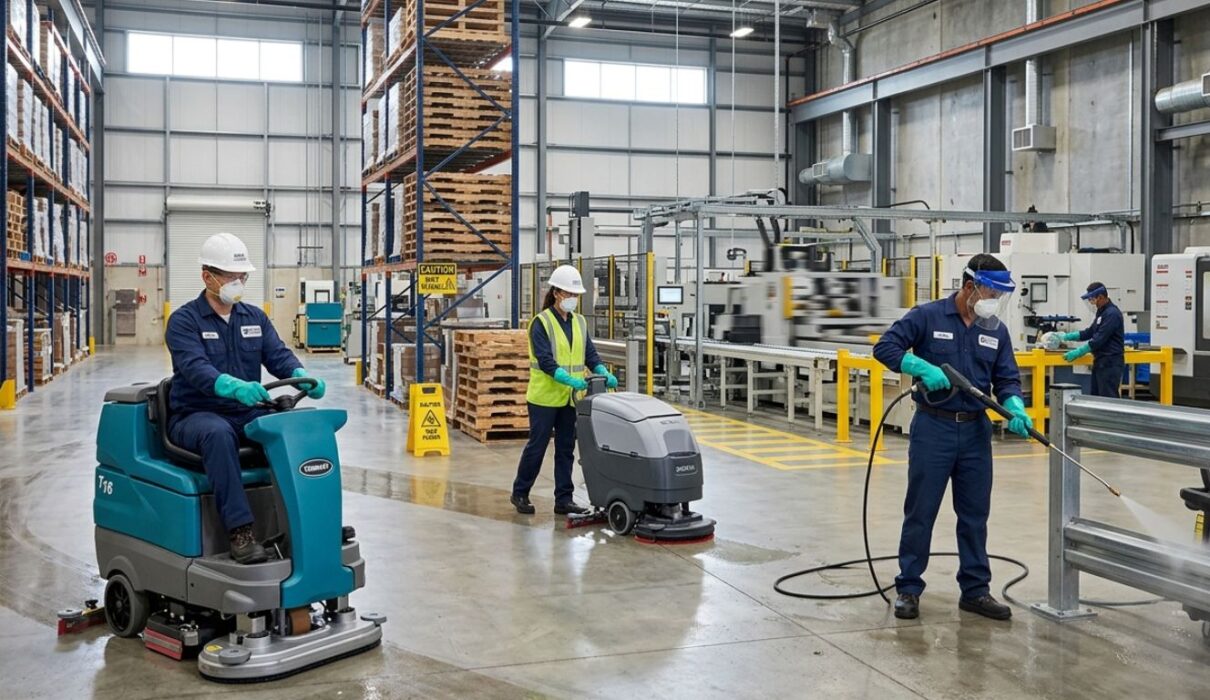
- Pressure washers for heavy-duty cleaning
- Floor scrubbers for large surfaces
- Degreasers for machinery and equipment
Using the right cleaning agents is equally important. Harsh chemicals may damage surfaces or pose health risks, so it’s crucial to choose products designed specifically for industrial use.
3. Train Staff Properly
Even the best cleaning plan can fail without proper execution. Staff training is vital to ensure safe and effective cleaning practices.
Training Should Cover:
- Proper use of equipment and chemicals
- Safety protocols and personal protective equipment (PPE)
- Waste disposal methods
- Emergency response procedures
Well-trained staff can identify potential hazards early and handle cleaning tasks more efficiently.
4. Prioritize Safety and Compliance
Industrial cleaning must align with health and safety regulations. Compliance not only protects workers but also prevents legal issues.
Best Practices:
- Follow local and international safety standards
- Use clearly labeled cleaning chemicals
- Maintain Material Safety Data Sheets (MSDS)
- Ensure proper ventilation during cleaning
Regular audits and inspections can help identify gaps and improve compliance.
5. Implement Preventive Maintenance
Cleaning should not be reactive—it should be preventive. Regular maintenance can reduce the buildup of dirt, grease, and contaminants.
Examples of Preventive Measures:
- Routine equipment cleaning to prevent breakdowns
- Scheduled floor maintenance to avoid slip hazards
- Dust control systems to maintain air quality
Preventive cleaning reduces long-term costs and minimizes downtime.
6. Outsource to Professional Cleaning Services
For many industrial facilities, outsourcing cleaning tasks to professionals is the most effective solution.
Benefits of Outsourcing:
- Access to advanced equipment and expertise
- Consistent and high-quality results
- Reduced burden on internal staff
- Compliance with industry standards
Professional cleaning companies specialize in handling complex industrial environments, making them a valuable partner.
7. Leverage Technology for Efficiency
Modern technology can significantly enhance industrial cleaning processes.
Innovative Solutions Include:
- Automated cleaning machines
- IoT-based monitoring systems
- Digital scheduling and reporting tools
These technologies improve efficiency, reduce human error, and provide real-time insights into cleaning performance.
8. Focus on Waste Management
Proper waste management is a critical aspect of industrial cleaning.
Key Considerations:
- Segregate hazardous and non-hazardous waste
- Use appropriate disposal methods
- Comply with environmental regulations
Effective waste management not only keeps the facility clean but also supports sustainability efforts.
9. Monitor and (Improve) Continuously
Cleaning management is an ongoing process. Regular evaluation helps identify areas for improvement.
How to Monitor Effectiveness:
- Conduct routine inspections
- Gather feedback from employees
- Track key performance indicators (KPIs)
- Adjust cleaning schedules and methods as needed
Continuous improvement ensures the cleaning strategy remains effective over time.
Conclusion
Managing cleaning in industrial facilities requires a strategic and proactive approach. From developing a structured plan to leveraging advanced technology, every step plays a crucial role in maintaining a safe and efficient environment.
By investing in the right tools, training staff, and considering professional services, businesses can achieve high standards of cleanliness and compliance. Ultimately, effective industrial cleaning is not just a necessity—it’s a competitive advantage that supports long-term success.